Ever watched a Korean person get into an elevator? Their finger is already jabbing the "Close Door" button before their whole body has even made it inside — with the focus and intensity of a bomb squad technician who has exactly ten seconds left on the timer. Look closely at that button on almost any elevator in Korea, and you'll see the paint completely scratched off, worn down to bare plastic by years of pure impatience.
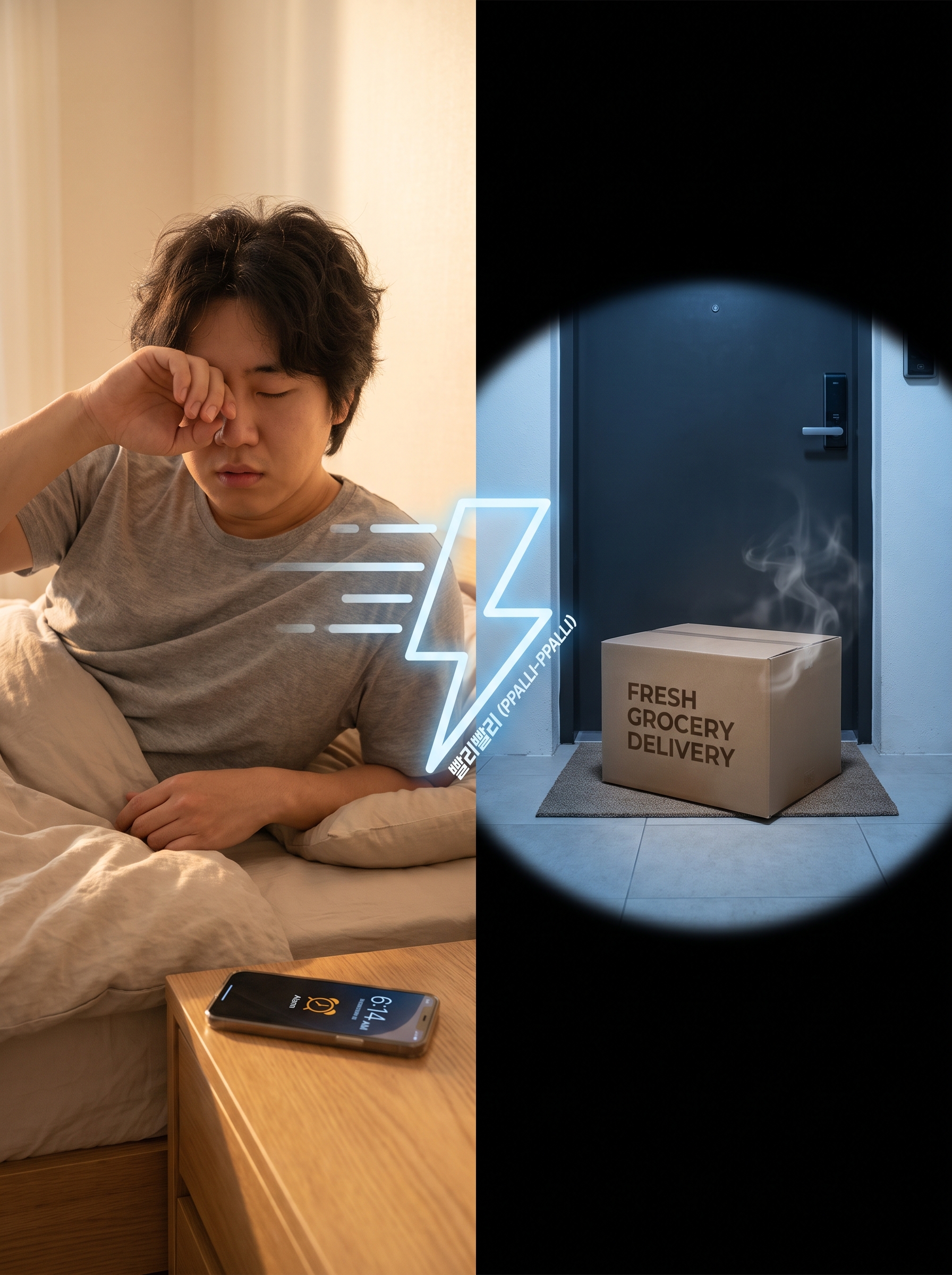
Now try this one: it's 11:50 PM, and you suddenly remember you're out of milk for tomorrow's breakfast. In most of the world, that's simply tomorrow's problem. In Korea? You tap a few buttons on your phone, fall asleep, and by 6 AM a box of fresh groceries is quietly sitting outside your door — before you've even opened your eyes. Welcome to ppalli-ppalli (빨리빨리), the invisible turbo engine running under every single minute of daily life here.
[ Ppalli-ppalli” Is More Than Just “Fast” ]
Ppalli (빨리) simply means "fast." But Koreans rarely say it just once — because in Korean, repeating a word cranks up the intensity. So "fast" becomes ppalli-ppalli, which really means something closer to "MOVE. RIGHT. NOW." It's not just something people shout at slow walkers on the subway stairs — it's a full mindset that quietly governs how fast a restaurant brings you water, how fast a website is expected to load, and how fast a country rebuilds itself from ruins. If Korea had a national motto, ppalli-ppalli would honestly be a strong candidate.
[ Where Did This Crazy Speed Come From? ]
Rewind a few decades: Korea endured Japanese colonial rule until 1945, then the devastating Korean War (1950–1953), which left the country as one of the poorest nations on earth. Rebuilding from literal ashes left zero room for taking it slow — every wasted year meant another year of poverty. Through the hyper-rapid industrialization of the 1960s–80s, later nicknamed the "Miracle on the Han River," speed stopped being a personality trait and became a matter of national survival. That urgency never fully left — it just changed clothes, from factory assembly lines into elevator buttons and delivery apps.
[ Hilarious Examples Hidden in Everyday Life ]
Once you know about ppalli-ppalli, you start spotting it everywhere — and it's genuinely hilarious.
- The Escalator Lane System: On escalators, Koreans instinctively stand on the right and leave the left lane open for anyone in a hurry to walk up — an unspoken rule almost everyone follows without ever being taught.
- The Crosswalk Sprint: The moment the pedestrian countdown timer hits single digits, a surprising number of people break into a light jog rather than simply waiting for the next green light.
- The 3-Minute Cup Noodle Panic: Instant ramyeon technically needs 3 minutes to cook, but plenty of Koreans start checking it at the 2-minute mark, convinced it's somehow taking "too long."
- The Kiosk Speedrun: At self-order kiosks in fast food restaurants, people often have their entire order (main, side, drink, payment) memorized and typed in before the person ahead of them has even finished bagging their food.
- The "Read but No Reply" Panic: If a KakaoTalk message shows as "read" but gets no reply within a few minutes, many Koreans start wondering, half-joking, "did I do something wrong?"
[ I’ve had an experience like this myself. ]
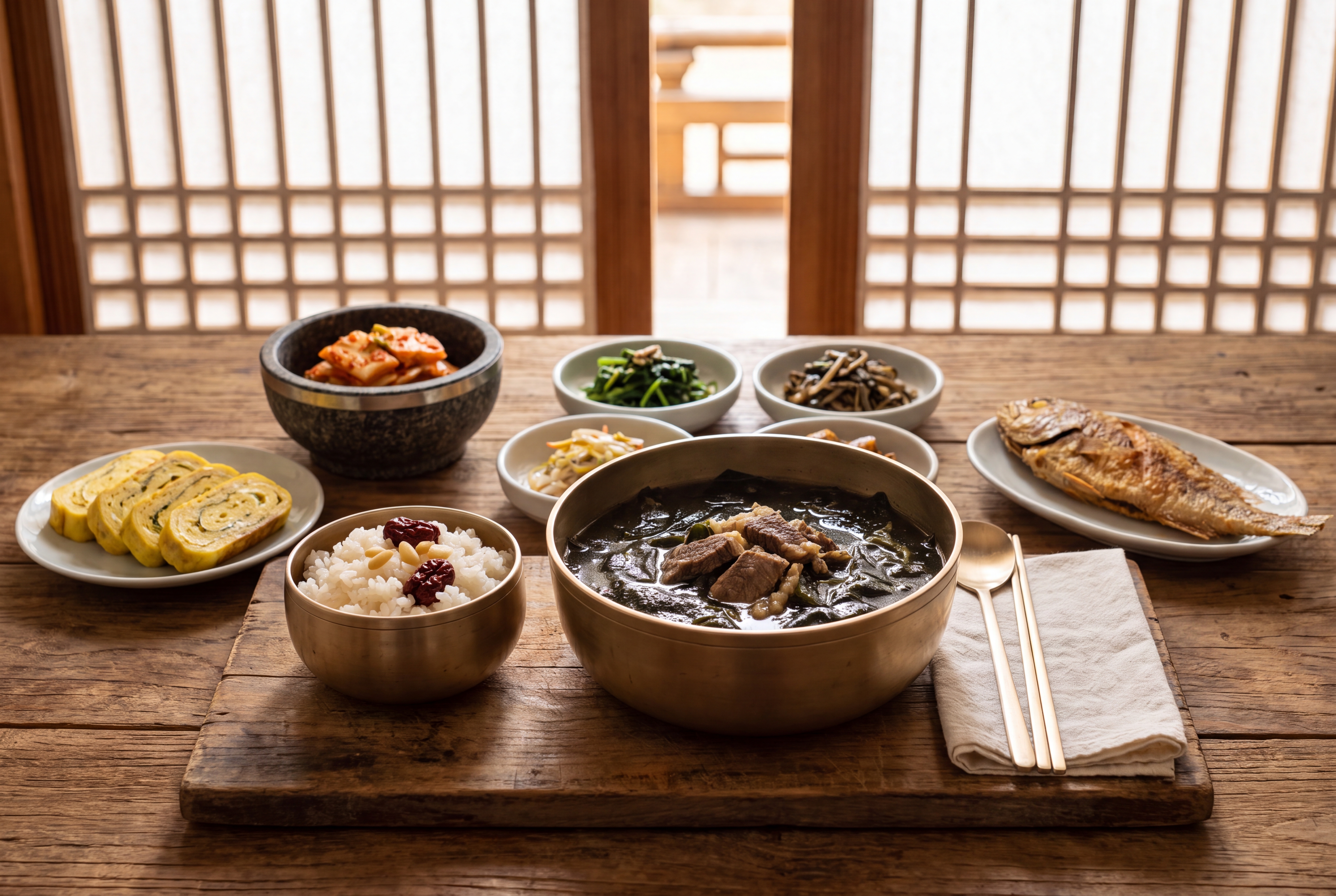
It was my mother’s birthday the next day, and in Korea, there is a tradition of celebrating birthdays by eating fresh miyeokguk (seaweed soup) in the morning. Why? Because in Korea, seaweed soup is the food mothers traditionally eat right after giving birth.
The problem was... I completely forgot to buy the ingredients for the seaweed soup.
So I hurriedly searched online for grocery delivery and ordered the fastest available option for the ingredients. And then—to my surprise—they arrived at my front door a little after 6 a.m. the next morning. ^^;
I had placed the order at 11 p.m., so isn’t that incredibly fast?
I was honestly shocked that such fresh ingredients arrived in only about seven hours.
[ The Ultimate Evolution: Delivery Services and World-Class Infrastructure ]
But ppalli-ppalli isn't just a funny personality quirk — it built some of the most advanced delivery and digital infrastructure on the planet. Craving fried chicken while sitting in the middle of a massive riverside park? A delivery rider will locate you by GPS in about 20 minutes. Need groceries for tomorrow morning? Order before midnight through Korea's famous "Dawn Delivery" (새벽배송) system, and they'll be waiting at your door before 7 AM — still cold, still fresh. In global broadband speed rankings, Korea has consistently placed near the top for years (exact rankings shift depending on the survey and year, but the pattern has held remarkably steady) — largely because Korean consumers simply refused to tolerate slow loading pages, and that demand kept pushing the infrastructure further and further.
[ The real culture shocks foreigners experience in Korea ]
Foreigners share strikingly similar stories about ppalli-ppalli culture shock:
- Getting into a taxi and feeling it start moving before the door has even fully closed.
- Ordering food and having the first dish arrive before you've finished ordering the rest.
- Texting a Korean friend "where are you?" only to get a reply that they're already standing right behind you.
- Trying to politely hold an elevator door open for someone walking toward it — only to have a Korean stranger gently move your hand off the button, because holding the door "too long" almost feels rude here.
[the bright side vs. the dark side]
Like most cultural traits, ppalli-ppalli has two sides. The bright side: incredibly efficient services, short waiting times, and constant innovation. The dark side: long working hours, burnout, and low tolerance for anyone moving "too slowly." Korea consistently ranks among the countries with the longest average working hours, and younger generations have recently started pushing back with buzzwords like "slow life" (슬로우 라이프) and work-life balance (워라밸) — a quiet rebellion against a lifetime of ppalli-ppalli.
[ Survival tips for foreigners ]
1. Don't take the speed personally — fast speech or fast service isn't rudeness, just the default pace. 2. Decide your order before reaching the counter. 3. Let delivery and map apps do the heavy lifting for you. 4. Keep your own rhythm — everything around you being fast doesn't mean your whole life has to be.
Ppalli-ppalli is Korea's survival instinct turned superpower — the invisible force behind worn-out elevator buttons, midnight grocery orders, and a country that simply refuses to wait.
“Ppalli-ppalli” (“hurry-hurry”) cannot be fully explained simply as a sign of impatience. It is the result of a desperate survival strategy, born out of the devastation of the Japanese colonial period and the ruins left by the Korean War, eventually solidifying into a cultural norm. From amusing everyday habits—such as standing in designated lanes on escalators, dashing across crosswalks, and impatiently waiting for cup noodles—to world-class dawn delivery services and internet infrastructure, traces of this culture can be found throughout Korea. At the same time, however, its darker side includes long working hours and burnout. Today, younger generations are seeking a new balance through slow living and a stronger emphasis on work-life balance.
What's the most surprising "ppalli-ppalli" moment you've experienced or heard about? Share it in the comments!


