"In Korea, paying for a meal is almost never a simple 50-50 split. Behind every reach for the check is a quiet negotiation of age, rank, and care. Here's how it actually works."
"한국에서 밥값을 계산하는 건 단순히 반씩 나누는 문제가 아닙니다. 계산서를 향해 손을 뻗는 그 짧은 순간에는 나이와 위계와 마음까지 얽힌 조용한 협상이 숨어 있습니다.
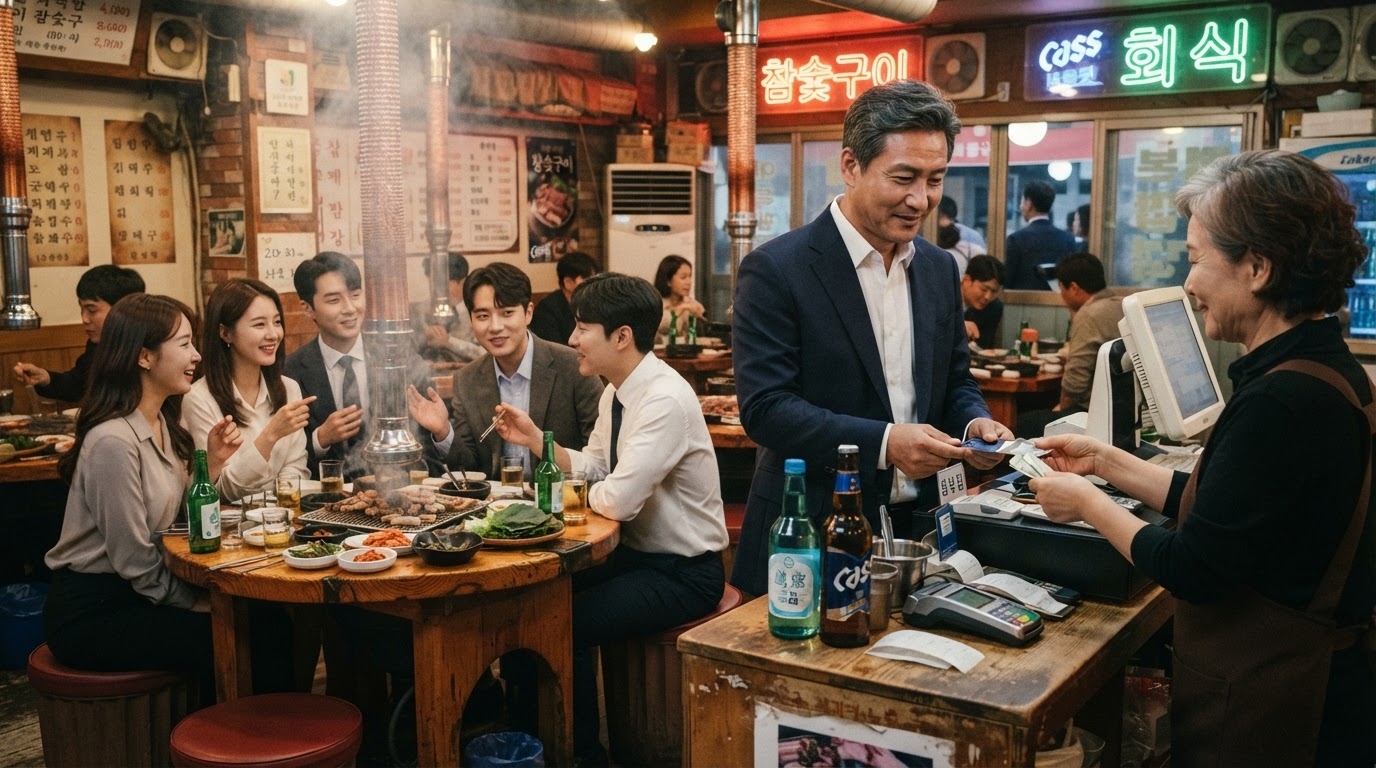
[계산서가 나오는 순간 테이블 분위기가 달라집니다]
There's a very specific moment at a Korean meal that catches a lot of people off guard — the second the food is finished and the receipt lands on the table. In many places, this is simple: someone opens a calculator app, everyone pays their share, done. In Korea, that same second triggers something closer to a quiet performance. Conversation keeps going, but eyes drift toward whoever seems most senior at the table, someone stands up a beat too early claiming they need the restroom, and a few loaded seconds pass before anyone actually moves toward the counter. Half the time, the outcome was already decided before anyone even sat down.
한국에서 식사가 끝나갈 때쯤 계산서가 테이블에 놓이는 그 순간은 처음 겪으면 꽤 당황스럽습니다. 많은 곳에서는 간단하죠. 계산기 앱을 열고 각자 몫을 내면 끝입니다. 한국에서 같은 순간은 조용한 공연에 조금 더 가깝습니다. 대화는 계속되는데 시선은 슬쩍 가장 손윗사람 쪽으로 향하고, 누군가는 마지막 한 입을 먹을 즈음 괜히 화장실 핑계를 대며 먼저 일어나고, 짧지만 묵직한 몇 초가 지나야 누군가 카운터로 움직입니다. 사실 결과는 이미 자리에 앉기 전부터 정해져 있는 경우가 많습니다.
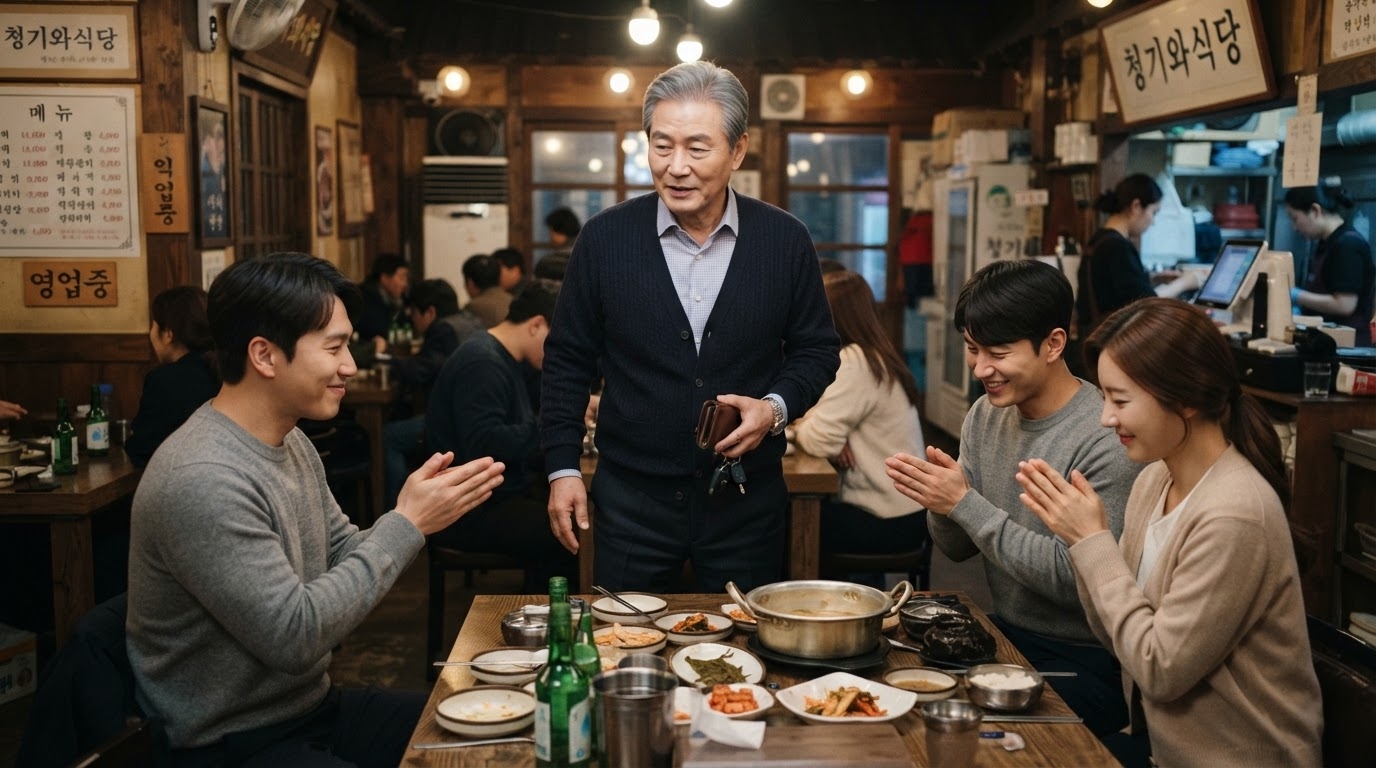
[한턱내기가 단순한 인심이 아닌 이유]
Treating someone to a meal here carries more weight than plain generosity. When someone older, more senior at work, or in a position of quiet authority pays for the table, it's partly an act of care, but it's also a small confirmation of their role in the group. Refusing to let them pay can land less like polite independence and more like rejecting the relationship itself. Among close peers of a similar age and income, though, splitting evenly with a payment app has become completely normal and carries zero awkwardness — the tension really only shows up once there's a visible gap in seniority at the table.
여기서 밥을 사는 행위는 단순한 관대함을 넘어섭니다. 나이가 많거나 직장에서 더 높은 자리에 있거나 조용히 권위를 가진 사람이 테이블 전체를 계산할 때, 그건 돌봄의 표현이기도 하지만 동시에 그 사람이 그룹 안에서 갖는 역할을 조용히 확인해주는 행위이기도 합니다. 그걸 굳이 막으면 정중한 독립보다는 관계 자체를 거절하는 것처럼 보일 수 있습니다. 반대로 나이와 소득이 비슷한 친한 친구 사이에서는 결제 앱으로 n분의 1을 하는 게 이제 완전히 자연스럽고 전혀 어색하지 않습니다. 긴장감은 눈에 보이는 서열 차이가 생길 때만 나타납니다.
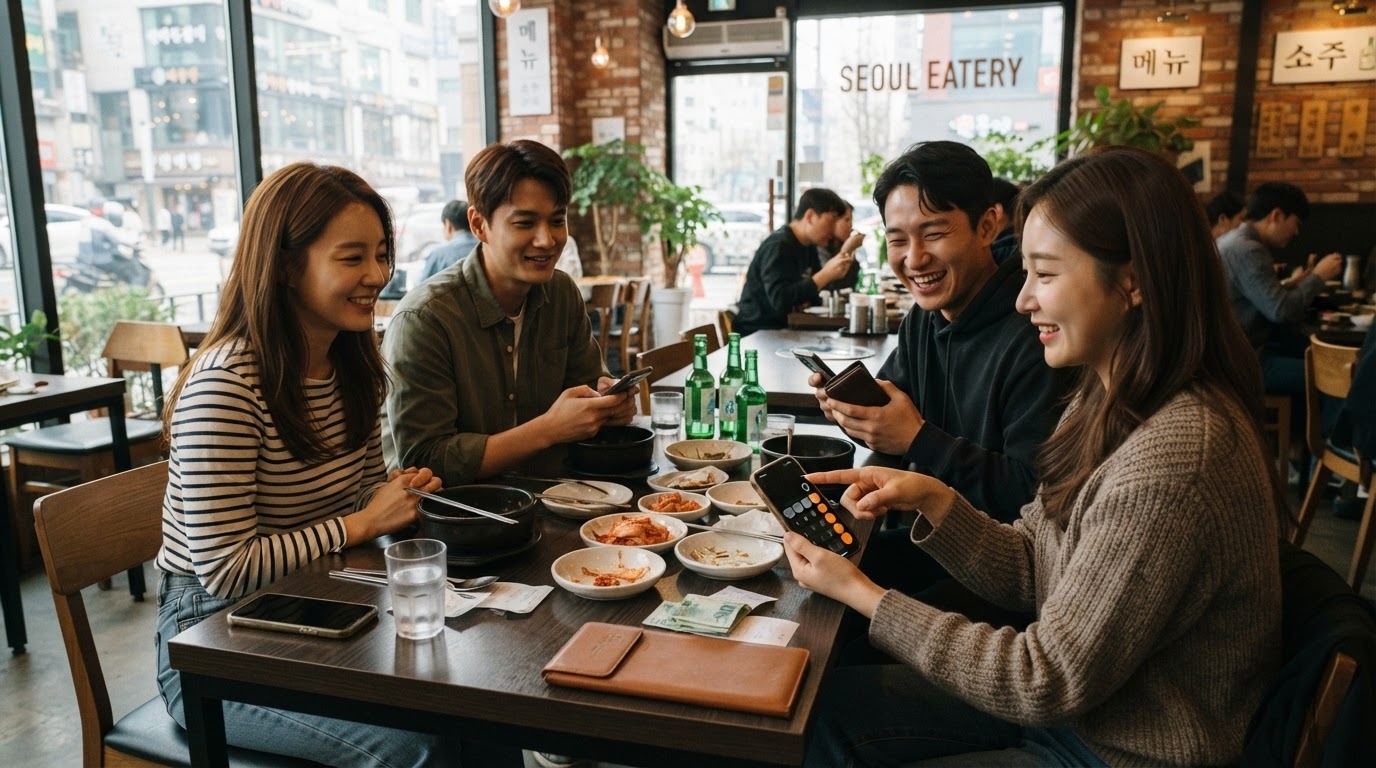
[누가 내야 하는지 정해주는 보이지 않는 규칙]
The unwritten hierarchy is surprisingly consistent. If there's a clear age gap, the oldest person is generally expected to cover it. In a work setting, the more senior person pays — a dynamic tied directly to the same logic that drives hoesik dinners. If someone specifically invited you out to celebrate a promotion, a birthday, or a new job, they're hosting, so they pay. When a senior person reaches for the bill, the correct move isn't to insist on splitting — it's to thank them sincerely and maybe offer to cover dessert or coffee afterward instead.
이 무언의 서열은 놀라울 정도로 일관됩니다. 나이 차이가 명확하면 가장 연장자가 계산하는 게 일반적입니다. 직장 자리에서는 더 높은 직급이 내는데, 이건 회식 문화를 지배하는 것과 같은 논리에서 나옵니다. 누군가 승진이나 생일, 취업을 축하하려고 특별히 자리를 만들었다면 그 사람이 호스트니까 계산합니다. 손윗사람이 계산서 쪽으로 손을 뻗으면 정답은 끝까지 나눠 내겠다고 고집하는 게 아니라 진심으로 감사를 표하고, 대신 이후의 커피나 디저트를 내가 사겠다고 제안하는 것입니다.
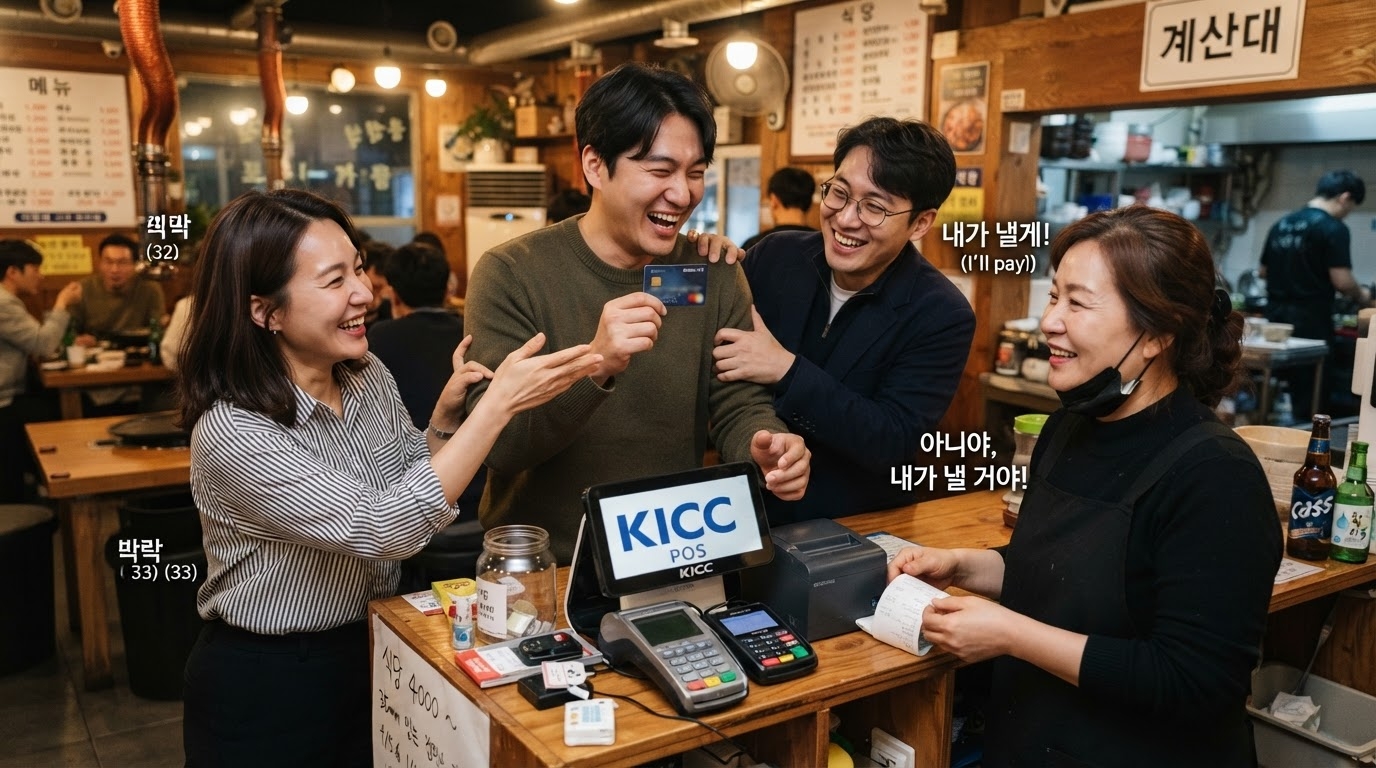
[계산대 앞 몸싸움이 사실은 애정 표현입니다]
Watch a group of Koreans finish a meal and you'll often see something almost comical — two or three people rushing the counter at once, each insisting they'll pay, occasionally physically nudging each other away from the card reader. It looks chaotic, but it's sincere theater. The person who ends up paying usually intended to all along, and the resistance from everyone else is a genuine display of not wanting to feel indebted — a way of saying the relationship matters more than the receipt.
한국 사람들이 식사를 마치는 장면을 보면 거의 웃긴 순간이 벌어집니다. 두세 명이 동시에 카운터로 달려가 서로 자기가 내겠다고 고집하고, 가끔은 카드 단말기 앞에서 서로를 슬쩍 밀어내기도 합니다. 밖에서 보면 혼란스럽지만 이건 진심 어린 연기입니다. 결국 계산하는 사람은 보통 처음부터 그럴 마음이었고, 나머지 사람들의 저항은 빚지고 싶지 않다는 진짜 감정의 표현입니다. 계산서보다 관계가 더 중요하다는 말을 그렇게 몸으로 하는 거죠.
[오늘 얻어먹으면 다음엔 내가 사야 하는 순환]
Korean dining culture doesn't really run on single transactions — it runs on a long cycle of reciprocity. If someone treats you today, there's an unspoken understanding that you'll return the favor next time, or contribute meaningfully somewhere down the line. Keeping score isn't seen as petty here; it's seen as respectful, because it means you're taking the relationship seriously enough to balance it out over time. It's the same invisible glue we've talked about before under the name jeong — showing up quietly at the bottom of every bill.
한국의 식사 문화는 한 번의 거래로 끝나지 않고 긴 상호성의 순환으로 돌아갑니다. 오늘 누가 사줬다면, 다음엔 내가 갚거나 어느 시점엔 의미 있게 보답해야 한다는 무언의 이해가 생깁니다. 여기서 계산을 기억해두는 건 쩨쩨한 게 아니라 오히려 예의로 여겨지는데, 관계를 시간이 지나며 균형 맞출 만큼 진지하게 대한다는 뜻이기 때문입니다. 이건 앞서 다뤘던 정이 계산서 밑바닥에 조용히 깔려 있는 것과 같은 원리입니다.
[카카오페이로 조용히 해결하는 요즘 세대]
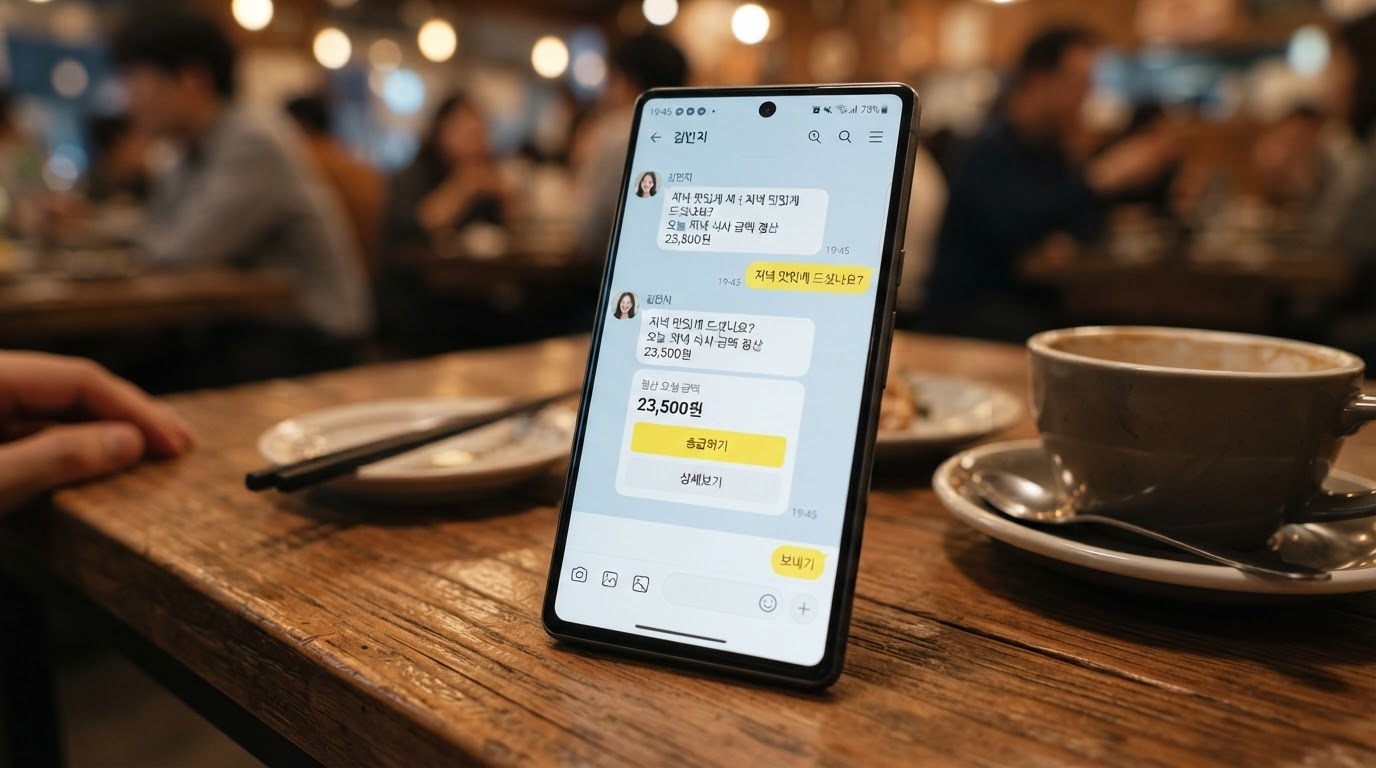
Like almost everything else in modern Korea, this culture is shifting fast among people in their 20s and 30s. Rather than asking a restaurant to split a bill across several cards — seen as a hassle for staff — one person now typically pays the full amount, then sends a KakaoTalk money request for exactly one-nth of the total within minutes. It skips the counter drama entirely while keeping the friendship financially clean, and among peers, simply saying "이번엔 각자 내자" (let's each pay this time) is now completely normal.
한국의 거의 모든 것이 그렇듯 이 문화도 20·30대를 중심으로 빠르게 바뀌고 있습니다. 식당에 카드 여러 장으로 나눠달라고 부탁하는 대신, 이제는 한 사람이 전체 금액을 먼저 계산하고 몇 분 안에 카카오톡으로 정확히 1/N 금액을 요청합니다. 계산대 앞의 실랑이는 완전히 사라지면서도 우정은 재정적으로 깔끔하게 유지되는 방식이고, 또래끼리는 "이번엔 각자 내자"라고 말하는 것도 이제 완전히 자연스럽습니다.
[제 기준으로는 이렇게 정리됩니다]
My honest take is that this whole ritual is a small, perfect example of the tension between jeong and modern practicality. The old system of taking turns treating each other creates a warm, sticky excuse to keep meeting again — but it also demands constant reading of the room and quiet math about who owes whom. The rise of mobile transfers feels like a very Korean compromise, keeping the smooth exit from the restaurant while settling the actual math privately on a phone screen.
제 기준으로 이 문화는 정과 현대적 실용성 사이의 긴장을 아주 작게, 그리고 완벽하게 보여주는 예시입니다. 번갈아 한턱내는 옛 방식은 다음에 또 봐야 할 따뜻하고 끈끈한 핑계를 만들어주지만, 동시에 끊임없이 분위기를 읽고 누가 누구에게 빚졌는지 조용히 계산해야 하는 피로도 함께 옵니다. 모바일 송금의 부상은 아주 한국적인 타협처럼 느껴집니다. 식당을 매끄럽게 나가는 겉모습은 유지하면서, 진짜 계산은 폰 화면 뒤에서 조용히 정리하는 거니까요.
[여러분의 계산 문화는 어떤가요]
Does your culture have a similar unspoken system for who pays, or is splitting evenly just the default with zero social weight attached? Have you ever been caught in an awkward moment at a Korean table right when the check arrived?
여러분 문화에도 누가 계산할지 정해주는 비슷한 암묵적 규칙이 있나요, 아니면 더치페이가 아무 사회적 무게 없이 그냥 기본값인가요? 한국 식사 자리에서 계산서가 나오는 순간 어색했던 경험이 있다면 댓글로 들려주세요.